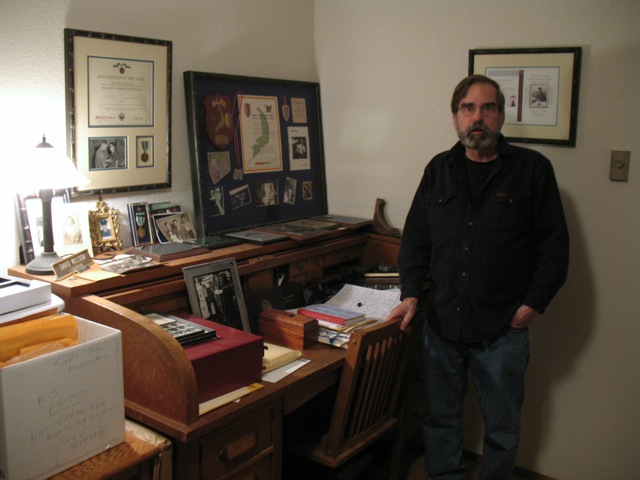
How Willson Came to Review the Novel
When I was trying to find someone willing to review my long novel, Willson responded to my email and agreed. Soon later he sent me a second email in which he asked if I was a Vietnam veteran. I thought that was significant in that it suggested he would look to find examples of how being a non-veteran I could not write a reliable novel about the war.
What Was My Overall Interaction with Willson
In the next several years, David and I exchanged more than 20 emails, up until the time he died from the aftermath of exposure to Agent Orange. I read and reviewed three of his books and he and I exchanged stories and opinions as fellow writers, Owing to this interaction, I grew to have a great deal of respect and regard for my friend David Willson (as I feel honored to call him), but in this section my business is to defend my novel.
What is My Response to Some Key Willson Remarks in his Review?
(1) Willson says:
“Why did combat pilots “kink” rather than jink? I think that “kink” is flat out wrong, and so are many other little things in the Vietnam War section of this book.”
My defense: This error (from a Word self-correction) occurred once while the correct term “jinK” was used correctly three times in other chapters. This was in a file of more than 800,000 words that I wrote, edited, formatted, and published entirely alone. I did extensive research on the planes and flying practices used by the pilots described in the novel, as the “References” section for this novel will make clear. I would also assert that there are not “many other little things,” and, in fact, the entire novel is meticulously based on reliable sources.
(2) Willson says
And why are C-Rats called “canned food”? Why were they heated up in boiling water and not with a little piece of C-4?
My defense: This detail was from a New York Times article (I think by Gloria Emerson) on the early days in Khe Sanh when it was constantly raining and the soldiers were improvising in meeting basic requirements. I never make up a detail of this kind,
Here is what Microsoft Copilot says:
Did troops ever boil C‑rations in whatever water was already being heated?
✔️ Yes — informally, and often.
Across Vietnam, soldiers frequently heated C‑ration cans by:
- Placing them in boiling water used for shaving
- Dropping them into pots used for heating water for coffee
- Setting them on vehicle manifolds
- Heating them with C‑4 (the most famous method)
This was common field improvisation, not a regulated procedure
(3) Willson says:
I lack the space to detail all anachronisms and wrong notes in the military parts of the novel, so l will just focus on the O’Rourke character and his love interest. I could not figure out why the author did not emphasize the difficulties of their romance, one between an Army Spec4 medic and an Army nurse.
I am not saying that officer nurses never fraternized with enlisted men—and sometimes have sex with them and sometimes marry them. And some enlisted men did relate in a familiar manner with officers. But it was unusual enough that it has to be explained and the reader has to be prepared for it. It is jarring for it to be presented as status quo, which it was not.
My defense: Willson is one hundred percent correct that I did not know a nurse’s correct rank, though her life as depicted otherwise was as documented in nurse Rhona Prescott’s website and other sources. I intend to correct Carpenter’s rank and fine-points of her related interaction with O’Rourke,– along the lines Willson suggests of dramatizing more how unusual it was,– in the file downloadable from this website.
Fine points of how will I change this, after further research on it; (a) Carpenter will become an RN through a two-year in-hospital program before going to Vietnam. She will enter the Army in a direct officer program and will be on duty less than six months later. (b) Fraternization, as I now understand it, would be frowned on. O’Rourke will get around this in his two pre-marriage meetings with Carpenter by staying in separate quarters officially while spending the entire time with her including at night. (c) O’Rourke and Carpenter will get married secretly in Hong Kong and remain in their separate posts.
NOTE: These changes will not be made in the original 2013 version of this novel (still downloadable on this website) but rather in a separate version called AGAINST THE WAR v2 also downloadable on this website (see “Historical” section of this website for more details).
Other fine points of the O’Rourke-Carpenter relationship (as originally written): (a) Carpenter first enters the novel in Chapter 11 as the girlfriend of Thomas Steward, more than two years before she goes to Vietnam. (b) Carpenter and O’Rourke know one another from the boat club and begin going out at the Chicago 1968 Democrat Convention where he is a demonstrator and she is a volunteer triage nurse responding to injuries sustained from Chicago police; (c) During the whole time O’Rourke is with Steward in California, he is described as being in love with Carpenter, exchanging love letters with her, and in fact partly planning to voluntarily go to Vietnam in the hope of seeing her there; (d) When O’Rourke does go to Vietnam he has no chain-of-command connection with Carpenter, He is in Chu Lai and she is stationed in Binh Thuy more than 500 miles away, in Southern Vietnam; (e) O’Rourke does secure a pilot friend’s help in hitching a ride for a weekend with her (this pilot is a courier going from base to base on a regular basis), but O’Rourke and Carpenter don’t have sex at that time. (f) Then subsequently O’Rourke manages to arrange R&R at the same time as Carpenter in China Beach, but he and she have separate rooms and don’t fully consummate their relationship because she is idealistic about wanting to be a virgin when she marries. (g) Finally, toward the end of the novel, O’Rourke and Carpenter get married in Hong Kong, — secretly — though they remain in their respective duty sites 500 miles apart and such is the case when O’Rourke loses his life in combat.
(4) Willson says:
Because of my personal involvement with Agent Orange (I was heavily exposed to it in Vietnam and am now dealing with Multiple Myeloma), I was bothered by an anachronistic speech given by an NVA major who lectures Major Morris when he is a POW, telling him that AO is causing physical defects in children in Vietnam, and also physical problems “to your own soldiers.”
I can’t swallow that as something that happened. It is excessively didactic, as well as anachronistic.
Context: Willson is referring here to the character Major Xuan Than of the North Vietnamese Army, who appears in Chapters 208, 209, 210, 211, and 220,
My defense:
(a} Is Xuan Than “excessively didactic”? Yes, and he is presented as such by his personal identity and by his sense of his role with respect to Morris. Chapter 209 begins as follows:
“Good morning, sir,” the officer began as he stood in the room like a professor before a class, at about that distance from Morris. “You are starting today a series of meetings that will take place in the next few weeks. The purpose of these meetings, major, is, in the spirit of our being fellow soldiers, to explain to you the rationale for the war from the perspective of the Vietnamese people.”
(Please continue to next page)